
A sleek glass-and-metal sphere, half composed of intricate circuit-like patterns and half of embossed global currency symbols, rests on a dark, reflective boardroom table. Around it, semi-transparent holographic graphs and economic charts float in mid-air: rising and falling lines, clustered bar graphs, and network diagrams glowing in cool blues and teals. Soft, diffused studio lighting from above creates clean reflections and subtle shadows, emphasizing the polished, professional aesthetic. Captured at eye level with a shallow depth of field, the focus is on the sphere’s detailed textures while the background of blurred modern office architecture suggests strategic decision-making. The mood is analytical and forward-looking, evoking the synergy between artificial intelligence and global economics in a photographic, hyper-real style.

About EconAI

Exploring how AI reshapes economies through evidence-based analysis from economists, data scientists, and policy researchers.

About

Why The Synergy of EconAI

Born from conversations between economists and machine learning practitioners, The Synergy of EconAI dissects real-world data, theory, and case studies to explain AI’s economic effects, then points you to foundational guides, recurring series, and timely briefs across our core topic areas.
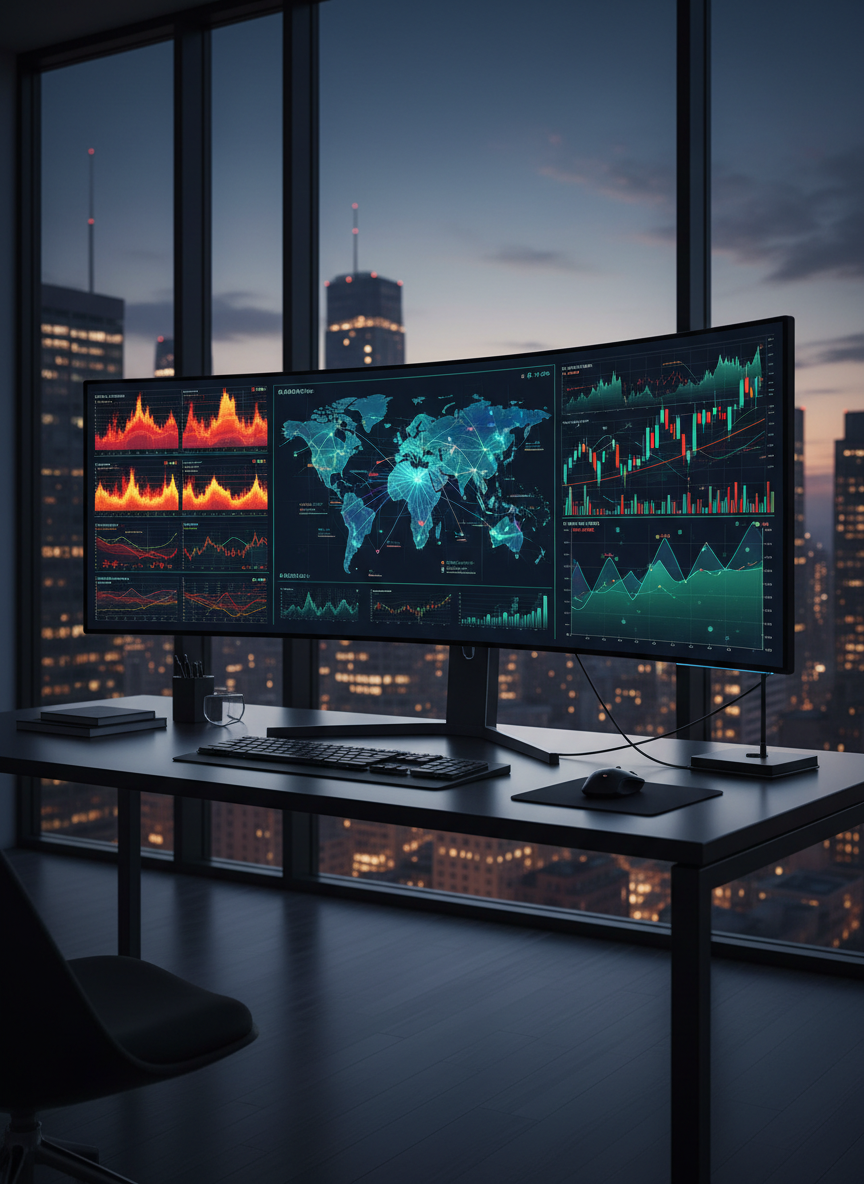

A high-end, ultra-wide computer monitor on a minimalist black desk displays a complex AI-driven economic dashboard: heatmaps of market activity, neural network diagrams overlaying a world map, and flowing real-time financial charts rendered in luminous blues, emerald greens, and amber highlights. The workspace is set against a panoramic city skyline at dusk, skyscraper windows twinkling outside a floor-to-ceiling glass wall. Cool ambient light from the monitor mixes with the soft blue hour glow, casting gentle reflections across the desk’s brushed metal surface. Shot from a slightly elevated three-quarter angle, everything is in crisp focus, conveying precision, clarity, and professional rigor. The photographic realism and clean composition communicate data-driven insight at the intersection of AI and economics.
An abstract “AI economy” cityscape built entirely from translucent data blocks and metallic circuit-like structures rises from a glossy black surface. Towers resemble stacked bar charts, while elevated bridges form flowing curves similar to neural network connections. Tiny, glowing nodes indicate transaction points, pulsing gently in gradients of cyan and amber. The background is a softly blurred horizon of faint gridlines and distant data structures. Side lighting from the left creates sharp, professional contrast, with crisp highlights on metallic edges and deeper shadows between blocks. Captured with a cinematic wide-angle lens at a low perspective, the scene feels vast yet ordered, conveying a sense of scalable, algorithmic markets in photographic realism with a clean, futuristic mood.

Our AI Economics Focus Areas

We examine AI’s influence on labor markets, firm productivity, competition, financial systems, and public policy, combining economic modeling, applied statistics, and institutional context so each article clarifies mechanisms, trade-offs, and practical implications for decision-makers and curious learners navigating technological change responsibly.

Contributors
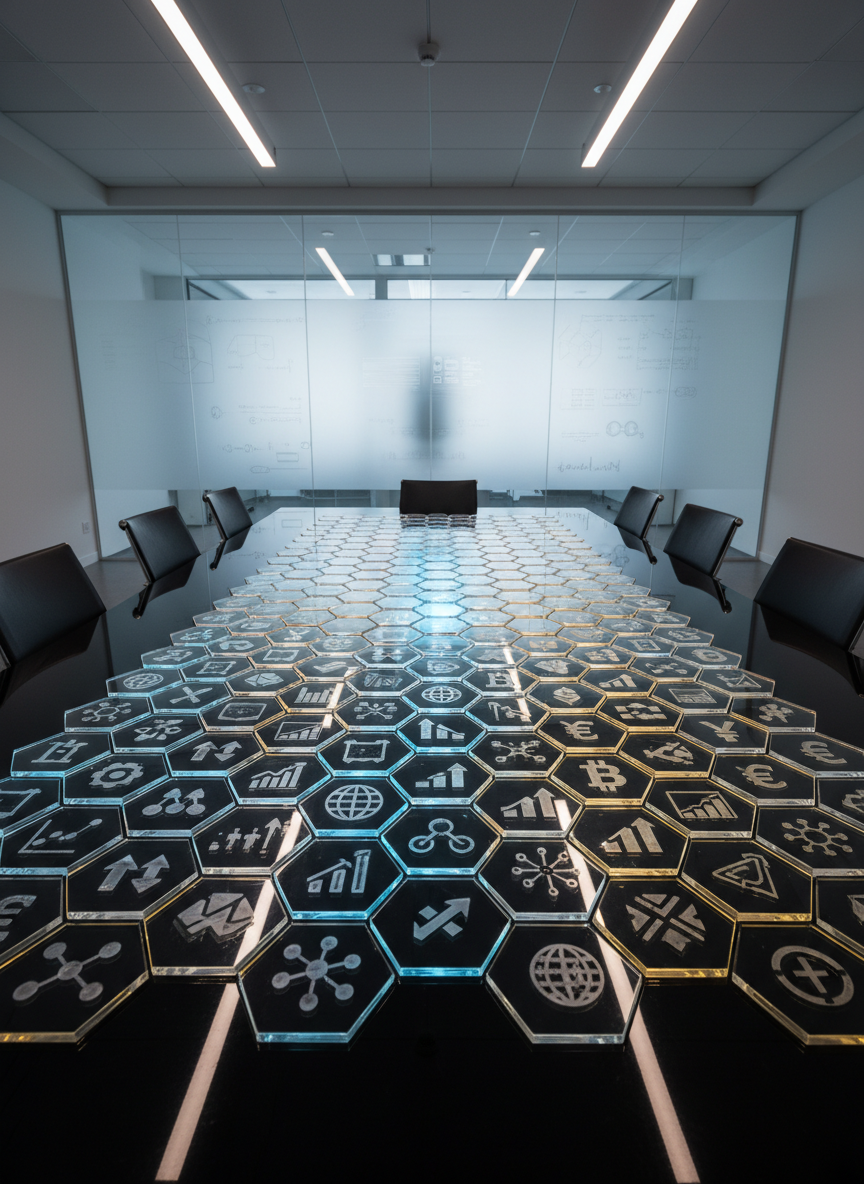
A long, black conference table is covered with neatly arranged translucent acrylic tiles, each etched with icons representing AI algorithms, economic indicators, supply chains, and digital currencies. Embedded LEDs within the table surface illuminate adaptive pathways between tiles, forming a glowing network that subtly shifts from cool blue to warm gold toward the frame’s edge, symbolizing value creation. The room is a modern glass-walled strategy lab, with frosted panels showing faint outlines of charts and equations. Overhead, soft linear lights produce even, professional illumination with delicate edge highlights on each tile. Photographed from a high, slightly diagonal angle for a clear top-down view, the atmosphere is disciplined and innovative, emphasizing structured thinking about AI-driven economic systems.

Aarav Sharma

CEO

Economist bridging AI models and markets, turning complex data into clear, evidence-based insight for readers.

A sleek glass-and-metal sphere, half composed of intricate circuit-like patterns and half of embossed global currency symbols, rests on a dark, reflective boardroom table. Around it, semi-transparent holographic graphs and economic charts float in mid-air: rising and falling lines, clustered bar graphs, and network diagrams glowing in cool blues and teals. Soft, diffused studio lighting from above creates clean reflections and subtle shadows, emphasizing the polished, professional aesthetic. Captured at eye level with a shallow depth of field, the focus is on the sphere’s detailed textures while the background of blurred modern office architecture suggests strategic decision-making. The mood is analytical and forward-looking, evoking the synergy between artificial intelligence and global economics in a photographic, hyper-real style.

Mateo García

CTO

Researcher analyzing algorithmic incentives, ensuring our AI economics coverage is rigorous, balanced, and transparent throughout.

A high-end, ultra-wide computer monitor on a minimalist black desk displays a complex AI-driven economic dashboard: heatmaps of market activity, neural network diagrams overlaying a world map, and flowing real-time financial charts rendered in luminous blues, emerald greens, and amber highlights. The workspace is set against a panoramic city skyline at dusk, skyscraper windows twinkling outside a floor-to-ceiling glass wall. Cool ambient light from the monitor mixes with the soft blue hour glow, casting gentle reflections across the desk’s brushed metal surface. Shot from a slightly elevated three-quarter angle, everything is in crisp focus, conveying precision, clarity, and professional rigor. The photographic realism and clean composition communicate data-driven insight at the intersection of AI and economics.

Zuri Ndlovu

Engineer

Data scientist quantifying AI’s impact on productivity, growth, and inequality using robust empirical methods worldwide.

An abstract “AI economy” cityscape built entirely from translucent data blocks and metallic circuit-like structures rises from a glossy black surface. Towers resemble stacked bar charts, while elevated bridges form flowing curves similar to neural network connections. Tiny, glowing nodes indicate transaction points, pulsing gently in gradients of cyan and amber. The background is a softly blurred horizon of faint gridlines and distant data structures. Side lighting from the left creates sharp, professional contrast, with crisp highlights on metallic edges and deeper shadows between blocks. Captured with a cinematic wide-angle lens at a low perspective, the scene feels vast yet ordered, conveying a sense of scalable, algorithmic markets in photographic realism with a clean, futuristic mood.

Leila Haddad

Designer

Policy analyst connecting technical advances in AI with real-world regulation, governance, and macroeconomic strategy debates.